
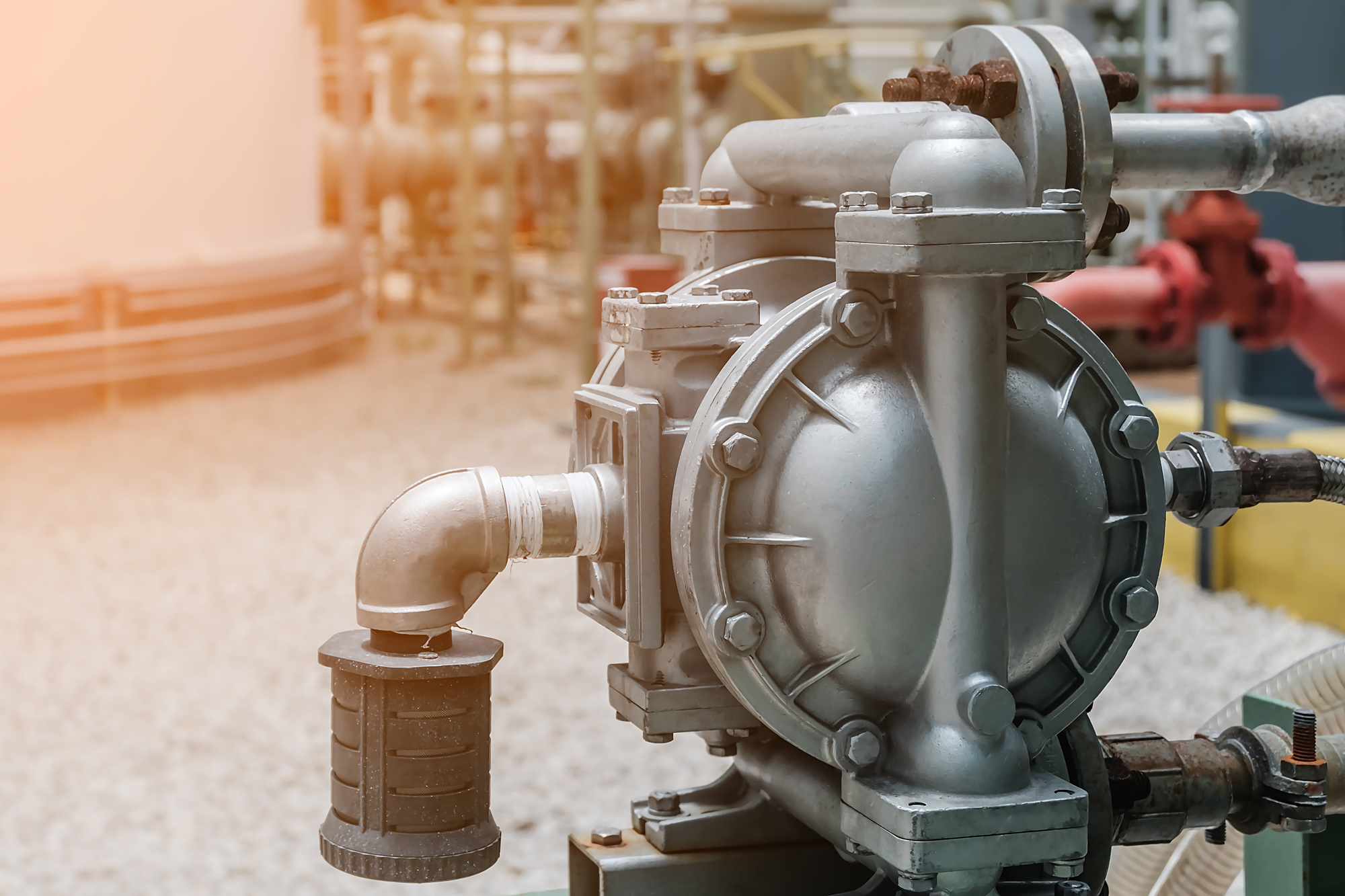
In industrial fluid management, the Air Operated Double Diaphragm (AODD) pump is a workhorse. Known for its ability to handle everything from clean water to abrasive slurries and aggressive chemicals, it is often the heart of a plant’s operations. However, when a pump begins to leak, it isn’t just a maintenance headache, it’s a safety hazard and a drain on your operational budget.
Understanding why these failures occur is the first step toward increasing the lifespan of your equipment and ensuring your facility remains compliant with local environmental and safety standards. Here are the most common causes of leakage and failure in industrial diaphragm systems.
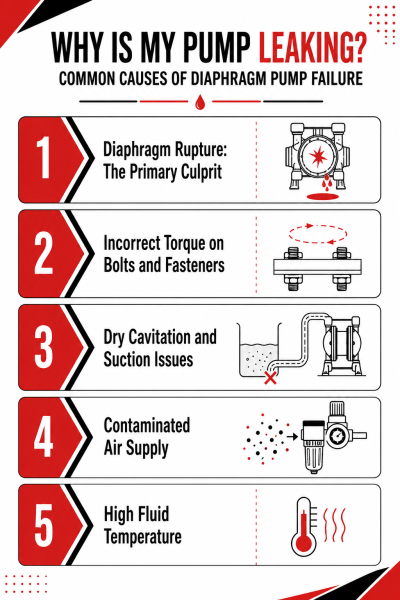
Diaphragm Rupture: The Primary Culprit
The most common cause of a leak is a compromised diaphragm. Because this component is constantly flexing, it eventually succumbs to material fatigue.
- Chemical Incompatibility: If the diaphragm material is not suited for the fluid being pumped, it will swell, soften, or become brittle. For example, using a Nitrile diaphragm for highly acidic chemicals will lead to rapid degradation.
- Abrasive Wear: High-solid content fluids act like sandpaper. Over time, these particles wear down the surface of the diaphragm until a hole develops.
- Over-Flexing: Operating the pump at pressures higher than the manufacturer’s recommendations forces the diaphragm beyond its intended stroke limit, leading to premature cracking.
2. Incorrect Torque on Bolts and Fasteners
AODD pumps are “clamped” together. The manifold, fluid chambers, and outer diaphragms are held in place by a series of bolts.
Many leaks occur because these bolts have loosened over time due to the natural vibration of the pump. Conversely, over-torquing is just as dangerous. Applying too much pressure can crush the O-rings or distort the sealing surfaces, creating a gap where fluid can escape. Regular maintenance schedules must include a “torque check” to ensure all fasteners meet the manufacturer’s specific Newton-meter (Nm) requirements.
3. Dry Cavitation and Suction Issues
Cavitation occurs when the pump is starved of fluid, causing vacuum bubbles to form and implode with violent force. This force doesn’t just reduce flow; it can actually pit and erode the internal fluid chambers and the diaphragm itself.
If your pump is “hammering” or making a loud rattling noise, it is likely experiencing cavitation. This usually stems from a suction line that is too small, a clogged inlet strainer, or a fluid that is too viscous for the current pump configuration.
4. Contaminated Air Supply
Since these pumps are air-operated, the quality of your compressed air is critical.
Moisture: High humidity (a common issue in local industrial zones) leads to water condensation in the air lines. This water can freeze in the exhaust or emulsify with lubricants, stalling the air valve.
Debris: Dust or pipe scale in the air line can score the delicate ceramic or metal surfaces of the internal air distribution system, leading to air-to-fluid leaks.
5. High Fluid Temperature
Whether polypropylene, stainless steel, or PVDF, it has a thermal limit. When fluid temperatures rise near the maximum rating of the pump body or the elastomers, the materials expand at different rates. This thermal expansion can loosen seals and cause “weeping” at the joints. Always ensure your pump’s material housing is rated at least 20% higher than your maximum operating temperature to provide a safety buffer.
How to Prevent Future Failures
Prevention is significantly cheaper than repair. To keep your industrial fluid systems running at peak efficiency, consider the following:
- Install an FRL Unit: A Filter-Regulator-Lubricator ensures your air motor receives clean, dry, and regulated air.
- Match Materials to Fluid: Use a chemical compatibility guide to double-check that your O-rings, diaphragms, and balls are resistant to your specific fluid.
- Conduct Periodic Audits: Don’t wait for a puddle to form. Check for changes in pump rhythm or air consumption, which are often early warning signs of internal wear.
Conclusion
Solving pump failures requires more than just a wrench; it requires technical insight into fluid dynamics and material science. Selecting a high-quality system from the start is the best defense against frequent downtime.
At Thongfatt Jaya, we specialize in providing robust industrial fluid solutions tailored to the demanding environments of the Malaysian manufacturing, chemical, and wastewater sectors. From high-performance air blowers to specialized diaphragm systems, our technical team is ready to help you optimize your fluid transfer processes.
Ready to upgrade your system’s reliability? Explore our comprehensive range of diaphragm pump at Thongfatt Jaya today and ensure your operations stay leak-free and efficient.
Frequently Asked Questions
Why is my diaphragm pump leaking fluid from the air exhaust?
A leak in the exhaust indicates a ruptured diaphragm. Fluid has bypassed the primary seal and entered the air motor, requiring immediate diaphragm replacement to prevent internal damage.
How can I prevent a diaphragm pump from leaking?
Perform regular torque checks on all bolts, install a filter-regulator to ensure clean air supply, and verify that the pump materials are chemically compatible with your fluids.
What causes the bolts on a diaphragm pump to loosen?
Natural operational vibrations can cause fasteners to loosen over time. Regularly re-torquing bolts to the manufacturer’s specified settings is essential to maintain a leak-proof, airtight seal.
How does chemical incompatibility cause pump failure?
Using the wrong elastomers causes diaphragms to swell, soften, or crack. This leads to a loss of structural integrity, eventually resulting in leaks and total pump operational failure.
Can an over-pressurized air supply cause the pump to leak?
Yes, excessive air pressure forces the diaphragm beyond its stroke limits, leading to premature tearing and manifold stress, which creates gaps in the sealing surfaces and causes leaks.