
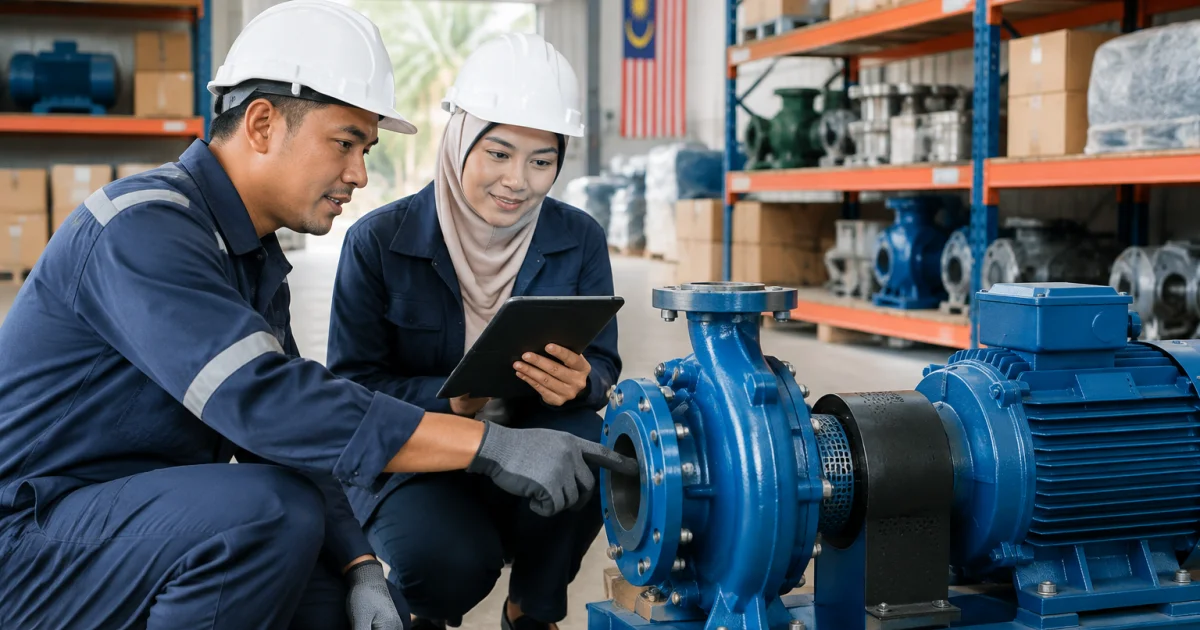
Buying pumps online can feel simple: compare a few specs, check photos, and place an order. In Malaysian industrial projects, the bigger cost is often what happens after purchase—wrong sizing, unsuitable materials, missing accessories, schedule delays, and slow troubleshooting when a system underperforms on site.
That’s why, for many projects, working with a Pump Supplier Malaysia partner (not just an online seller) is usually the safer choice for contractors, facility managers, and procurement teams. In my experience, pump projects succeed or fail less at checkout and more during installation, commissioning, and daily operation.
Online purchasing still has a place—especially for proven repeat items. But for pump packages, chemical-duty applications, engine-driven sets, or time-critical dewatering, a local supplier relationship often delivers better outcomes than a cart-and-courier model.
Industrial pump sourcing isn’t “shopping”—it’s risk management
A pump is only one part of a system. Even if the model is correct, real site conditions can change performance: suction lift and line losses, fluctuating water levels, dirty liquids, intermittent duty, voltage variation, controls, and tight mechanical constraints.
When you buy online, your team typically has to carry more of the risk checks, including:
- Duty point validation: confirming flow, head, and the pump’s efficient operating range (not just brochure maxima).
- Electrical and control compatibility: motor sizing, frequency/phase, starter vs VSD/inverter needs, cable sizing, and protection.
- Materials and sealing: ensuring wetted parts and elastomers suit temperature, chemicals, and solids/abrasives.
- Complete installation scope: hoses, strainers, couplings, foot/check valves, pressure switches/tanks, meters, and fittings.
- Practical install constraints: footprint, priming approach, ventilation/noise, access for maintenance, and safe handling.
Each item is manageable on its own. The problem is time pressure: a local supplier helps reduce assumptions and close gaps before equipment arrives on site.
Local technical support prevents the most expensive mistake: misapplication
Misapplication is a common reason pumps disappoint in the field. A unit can be “right on paper” and still fail to meet expectations due to suction conditions, operating range, or fluid reality. Local technical support has an advantage here because it tends to surface the unglamorous details that marketplaces don’t.
Typical issues a local partner can help catch early include:
- End suction centrifugal pump selection: confirming NPSH margin, suction conditions, system curve, and whether the pump will spend most of its time throttled.
- Self-priming expectations: performance depends on priming height, suction line design, air leaks, and the fluid—poor setup can lead to dry-run failures.
- Diaphragm pump realities: output depends on air supply quality (or DC supply), viscosity, duty cycle, and correct ball/seat and elastomer choices.
- Chemical/process fluids: a wrong elastomer can swell, leak, or fail early even when the pump body appears “chemical resistant.”
- Slurry and wastewater: solids handling is about impeller design, wear rate, speed, and maintenance planning—not only discharge size.
Online listings often aim for broad applicability. A local supplier can translate your site conditions into a reliable selection and recommend the right pump type, motor, or accessories to avoid rework.
Availability and lead time: the hidden advantage of local inventory and substitutions
Online delivery dates can look attractive, but industrial schedules depend on how dependable those dates remain once reality intervenes: incorrect shipments, missing parts, customs delays, or the need to change configuration after technical review.
A local supplier typically helps by:
- Confirming specs quickly: faster alignment (often via call or site discussion) before ordering.
- Offering workable equivalents: proposing substitutions with known curve/motor/frame compatibility instead of guesswork.
- Delivering package readiness: bundling the pump with the accessories and controls needed for installation and commissioning.
This is especially valuable for shutdown windows, handover deadlines, and urgent dewatering where “ready-to-install” matters more than the lowest line-item price.
After-sales support is not a “nice-to-have” on industrial sites
Even good equipment can face site issues: air ingress, incorrect rotation, poor suction conditions, clogged strainers, cavitation symptoms, overload trips, or control settings that don’t match process demand.
With online-only purchases, support may be limited to generic advice and email threads. A local supplier relationship more often includes:
- Commissioning guidance: priming, venting, rotation checks, and basic verification of flow/head.
- Spare parts access: seals, diaphragms, valves, and wear parts—particularly important for diaphragm pump and chemical-duty work.
- System-level troubleshooting: helping isolate whether the constraint is pump selection, piping, power, controls, or process conditions.
For industrial water pump installations, support is part of the product—especially where uptime, safety readiness, compliance, or large-scale transfer is at stake.
A practical comparison checklist: local partner vs online purchase
To choose the lowest-risk procurement route, assess the full lifecycle, not only purchase convenience.
| Decision area | Online buying tends to suit | Local supplier tends to suit |
|---|---|---|
| Application certainty | Repeat purchases where duty is proven | New installs, unknown suction conditions, process changes |
| Technical validation | You have in-house pump engineering | You want selection support and risk checks |
| System completeness | You already know every accessory needed | You want one-stop bundling of pump, driver, controls, accessories |
| Lead time reliability | Non-critical tasks, flexible schedules | Shutdown windows, handover deadlines, urgent dewatering |
| Maintenance and spares | You stock spares and repair internally | You need faster parts access and after-sales guidance |
If your project aligns mostly with the right-hand column, the “cheapest online option” can become expensive once the pump hits site.
Where online buying can still make sense (and how to do it safely)
Online purchasing can be a strong tool when the application is already proven or when ordering standard accessories. If you buy online for industrial work, reduce risk by:
- Locking the duty point: confirm required flow/head at operating conditions.
- Specifying power and controls: voltage/phase/frequency, motor rating, starter type, and VSD/inverter compatibility.
- Confirming materials and seals: get explicit wetted parts and elastomers for chemicals, wastewater, or heat.
- Ordering the install kit: include hoses/piping interfaces, strainers, couplings, valves, switches/tanks, and fittings.
- Planning spares: consider wear and service kits for abrasive duty or diaphragm pumps to prevent downtime.
Even with safeguards, your team will typically manage troubleshooting and coordination more independently—so online is best when you’re comfortable owning that responsibility.
How Thong Fatt Jaya fits as a local project partner in Malaysia
For teams that prefer a local partner approach, Thong Fatt Jaya positions itself as a one-stop pumping solution provider in Malaysia, supplying pumps, pumpsets, motors, engines, blowers, and accessories across industries. The project value is not only product range, but aligning selection to site reality and helping deliver a complete installation with fewer surprises.
Depending on scope, this may include:
- Water pumps and pumpsets for transfer, circulation, boosting, drainage, and general plant services.
- Industrial and chemical pumps for corrosive liquids, process fluids, and tougher duty cycles.
- Diaphragm pumps and air blowers for transfer tasks, chemical handling, and air movement needs.
- Electric motors matched to duty and site power conditions.
- Petrol and diesel engines for engine-driven sets where power is limited or mobility is needed.
- Fire fighting pump systems where readiness and reliability are critical.
- Accessories and supporting equipment such as pressure tanks, pressure switches, flow meters, hoses, couplings, and inverters.
If you’re comparing options for industrial pump Malaysia sourcing, a practical question is: “If the pump doesn’t perform on day one, who helps us get it right—fast?” A local partner usually provides the most direct path.
Useful next reads and categories
- Water pump selection overview in Malaysia applications
- Pump accessories and supporting equipment
- Diaphragm pumps and blower solutions
- Diaphragm pump range
- Blower and air pump options
Conclusion: for industrial outcomes, local usually wins
Online buying optimizes for transaction speed. Industrial projects optimize for system performance and schedule certainty. Sometimes those goals align, but often they don’t.
For projects with real consequences—handover deadlines, production uptime, complex liquids, or safety requirements—a local Pump Supplier Malaysia partner is typically the better bet. You gain application-based selection support, more reliable packaging of the complete system, and a clearer route to troubleshooting and spares after installation.
Online purchasing can still work well for proven repeat items and non-critical tasks. But when the pump is part of a bigger engineering outcome, the local partner model tends to reduce risk—and risk is what usually costs the most on industrial sites.
Frequently Asked Questions
When does it make sense to buy an industrial pump online?
Online purchasing is usually best for repeat orders where the duty point and installation conditions are already proven (same flow/head, same piping, same liquid, same controls). It can also work for standard accessories. For new applications, site dewatering with unknown suction conditions, chemical handling, or tight commissioning windows, a local supplier relationship typically reduces risk.
What information should I prepare before contacting a local pump supplier?
Prepare the required flow rate and head (or pressure), liquid type and temperature, presence of solids/abrasives, suction conditions (lift, tank level changes, line length), power supply details (voltage, phase, frequency), operating hours/duty cycle, and any constraints like footprint, noise, or portability. The clearer your inputs, the faster a supplier can recommend a suitable pump and accessories.
How do I choose an end suction centrifugal pump for my project in Malaysia?
Start by confirming the duty point (flow and head) and the expected operating range, then ensure the pump curve places your duty near an efficient region. Check suction conditions and NPSH margin to reduce cavitation risk. Also confirm motor sizing, site voltage/phase, and whether throttling or variable speed control will be used. A local supplier can help validate these points against typical site issues.
Are diaphragm pumps a good alternative for chemicals and messy fluids?
Often yes, especially for transfer tasks involving chemicals, intermittent duty, or fluids that are difficult for standard centrifugal pumps. The key is selecting compatible wetted materials and elastomers, and ensuring the right drive method (air-operated or DC) and supply conditions. If air supply is unstable or the fluid is highly viscous, performance can vary—so selection support is valuable.
What should be included in a complete pump package for a construction or facility project?
Beyond the pump, many projects need matched motors or engines, control gear (starter or inverter/VSD where appropriate), suction and discharge hoses or piping interfaces, couplings, strainers/foot valves, check valves, pressure switches or tanks (for boosting), and instrumentation like flow meters where needed. Packaging these items together helps the site team install and commission without delays caused by missing parts.
Need a pump setup that will work on site—not just on paper?
Thong Fatt Jaya supports industrial and project teams in Malaysia with application-based pump selection, pumpsets, motors, engines, diaphragm pumps, fire fighting pump systems, and the accessories needed for a complete installation. Share your flow, head/pressure, liquid type, and site constraints, and we’ll help you shortlist a practical, supportable solution.