
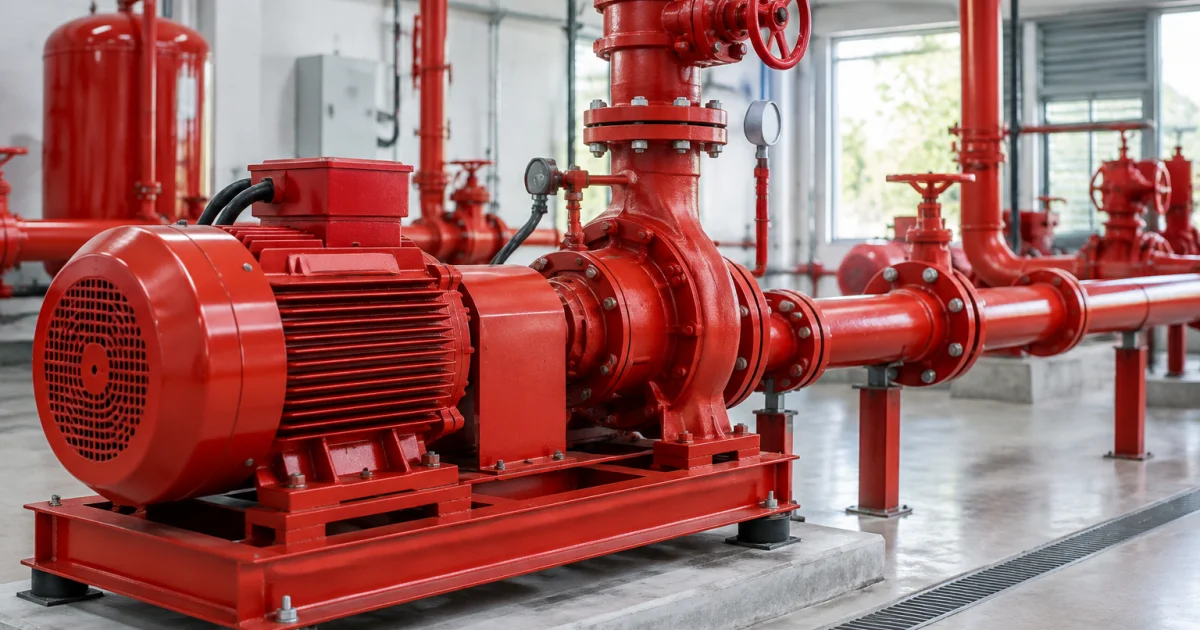
A factory fire water system is only as dependable as the pump that drives it. If the pump cannot start reliably, hold pressure, and match real site conditions (water source, pipe losses, heat, and maintenance), the whole system is exposed.
This beginner guide explains Fire Fighting Pump basics for factories in Malaysia with a practical, selection-focused approach: the common pump types, the key specifications on a pump schedule, and a simple way to shortlist options before engaging suppliers or consultants.
Important note: fire protection design, approvals, and acceptance testing must follow your project’s specified standard and local authority requirements. Use this article to understand terminology and ask better questions; finalize sizing, layout, and testing with your appointed fire engineer and the applicable standard.
What a factory fire pump system actually does
A fire pump ensures your fire water network delivers enough flow and pressure to hydrants, hose reels, sprinklers, monitors, or other protection points during a fire. It may sit idle most days, but it must start automatically and run under emergency conditions.
In a typical setup, the pump takes suction from a dedicated source (tank, reservoir, or other supply) and discharges to a ring main/header feeding the site network. A complete system commonly includes:
- Main fire pump (often electric motor driven)
- Standby pump (often diesel engine driven, depending on standard and philosophy)
- Jockey pump (pressure-maintenance pump to reduce main-pump cycling)
- Controllers and starting logic (auto start on pressure drop)
- Valves, strainers, check valves, and instrumentation
For buyers, the goal is a complete starting-and-running package that delivers the required duty at the most remote outlet after elevation and friction losses are included.
Fire pump types you will see in factories
Factories choose configurations based on water source, space, maintenance capability, and required duty.
End suction centrifugal pumps (common and practical)
End suction centrifugal pumps are compact, cost-effective, and generally straightforward to service. They suit many factories when suction conditions are stable and properly designed.
Confirm whether the set will operate on flooded suction (preferred) or needs to lift water (higher risk unless engineered carefully for fire duty).
Split-case pumps (robust for higher flow)
Horizontal split-case pumps are often selected for higher flows and steady operation. The split casing improves maintenance access with less disturbance to pipework. Larger ring mains, multiple hydrants, or higher-demand sprinkler zones often point to this option, though it typically needs more floor space.
Vertical turbine pumps (when suction supply is below grade)
Where the source is a sump, well, or underground reservoir, vertical turbine pumps can reach down into the water. They are useful when flooded suction is not feasible, but require careful engineering, alignment, and maintenance planning.
Electric motor vs diesel engine pumps
Many factories use an electric motor-driven main pump with a diesel engine-driven standby for resilience during power disturbances (subject to your required standard and project philosophy).
For diesel sets, reliability depends on the full engine package: correct engine rating, cooling, starting batteries/chargers, fuel storage, ventilation, exhaust routing, and a realistic testing routine. When comparing vendors, ask which engine models are supported locally and what spare parts availability looks like.
Portable fire pump sets (site response and temporary coverage)
Portable pump sets can support remote areas, temporary works, or contingency response. They can be a useful add-on, but they do not replace a properly designed fixed system where one is required.
Key specifications that matter (and what they mean)
Pump datasheets combine hydraulic, mechanical, and driver details. The selection objective is consistent: meet the required duty point reliably, with suitable margin, under stable suction conditions.
1) Duty point: flow rate and pressure (or head)
The duty point is the required flow at the required pressure (often expressed as head in meters) at a defined reference point. Some projects specify pump discharge duty; others specify performance at the most remote outlet and back-calculate pump duty including losses.
Selection tip: matching flow alone is a common mistake. If you ignore head after elevation and friction losses, the far end of the plant may not meet required pressure.
2) Total dynamic head (TDH) and system losses
TDH typically includes elevation difference, friction losses through pipework/valves/fittings, and required residual pressure at outlets. Large sites can have significant losses from long ring mains, branches, and multi-storey buildings.
Selection tip: request a simple loss summary (even preliminary) to understand what drives head: long runs, height, or residual pressure targets.
3) Water source and suction conditions (NPSH and flooded suction)
Many pump problems start at the inlet: undersized suction lines, too many elbows, low water level, clogged strainers, or air ingress. Centrifugal pumps need adequate inlet conditions to avoid cavitation and capacity loss. While your engineer checks NPSH, you can still validate the basics:
- Is there a dedicated source with a stable minimum water level?
- Is flooded suction achievable for the chosen arrangement?
- Is suction piping conservative (adequate diameter, minimal restrictions, cleanable strainer arrangement)?
4) Pump curve, operating range, and margin
Pumps operate on a curve, not a single point. Your duty point should sit in a stable region to reduce vibration risk and avoid driver overload.
Selection tip: ask suppliers to plot your duty on the pump curve and confirm driver sizing across expected operating conditions.
5) Driver sizing: motor kW or engine horsepower
For electric sets, confirm motor rating and starting method suitability for your electrical system. For diesel sets, confirm the engine is rated for the pump load and site conditions, and that cooling/ventilation are practical for the pump room.
6) Materials and corrosion considerations
Humidity, coastal exposure, or dirty water can shorten service life. Materials and coatings matter, as do strainers and flushing provisions where sediment is expected.
7) Controls, starting reliability, and testing provisions
Fire pumps should start automatically on pressure drop and be tested routinely. Ensure controls and the room layout support realistic testing and maintenance, including:
- Controllers, auto-start logic, alarms
- Battery/charging arrangements (diesel)
- Pressure sensing points, gauges, and isolation valves
- Test line or flow-test arrangement as required by the design
How to choose: a practical step-by-step shortlist for factories
At the commercial investigation stage, a structured enquiry helps you compare suppliers on the same basis and reduces selection risk.
Step 1: Clarify the protected risks and demand scenario
Confirm what the system must support (hydrants, sprinklers, foam, monitors, or combinations). Ask for the worst-case area and which outlets must operate simultaneously in the design scenario.
Step 2: Confirm your water source and pump room constraints
Document storage type/location, minimum water level, suction arrangement, and pump room space, access clearance, and ventilation. These constraints often determine the most practical pump configuration and driver choice.
Step 3: Decide on redundancy philosophy (main/standby/jockey)
Jockey pumps maintain pressure and reduce nuisance starts. Main/standby philosophy depends on the required standard, but day-to-day reliability also depends on what your team can test and maintain consistently.
Step 4: Translate demand into a pump duty point
Get (or request) the duty flow and discharge head/pressure required at the pump discharge, with assumptions noted (elevation, pipe sizing, estimated friction losses). Provide this duty point plus suction details to suppliers so they can match an appropriate curve and driver.
Step 5: Compare offers beyond price
Use a consistent checklist:
- Hydraulic fit: duty point on curve, stable operating range, driver margin
- Mechanical build: construction, coupling, baseplate, alignment approach
- Controls/accessories: controllers, sensors, valves, gauges, test connections
- Serviceability: access for seals, bearings, inspections
- Local support: spare parts availability, after-sales response, maintenance guidance
Also confirm supply scope: some quotes cover only the pump and driver, while others include controllers and key accessories needed for a complete set.
Step 6: Plan commissioning, routine testing, and maintenance
Selection and operation go together. Before purchase, align on a routine covering start tests, periodic flow tests (as specified), diesel fuel management, battery checks, and recordkeeping.
Common mistakes to avoid when buying a fire pump set
- Choosing by HP/kW only instead of confirming the curve and required head at duty.
- Neglecting suction design (long runs, small diameter, many elbows, air leaks, clogged strainers).
- Underestimating pipe losses on large sites with long ring mains and branches.
- Treating diesel standby as low-maintenance; engines need structured testing and upkeep.
- Missing accessories and spares (valves, pressure switches, couplings, wear parts) in scope.
Where Thong Fatt Jaya fits into your selection process
Thong Fatt Jaya supplies pumps, engines, motors, and accessories as a one-stop pumping solution provider in Malaysia. For factory fire protection projects, the best starting point is a clear duty point, water source details, and pump room constraints. With these basics, a pump specialist can help shortlist configurations, confirm driver sizing, and align the package with installation and maintenance realities.
To see typical options, explore: Fire Fighting Pump, Fire Fighting Engine Pumpset, High Pressure Fire Fighting Pump Transfer Pumps, and Portable Fire Fighting Pump Set Pfp11.
Conclusion: choose for duty, reliability, and maintainability
Selecting a factory fire pump is a risk-management decision. Start with the demand scenario and water source, then confirm a duty point that includes elevation and friction losses. Compare pump types (end suction, split-case, vertical turbine) against site constraints and serviceability, and verify driver and control reliability, especially for diesel standby sets.
With a clear shortlist and the right questions, you can move from shopping for a pump to specifying a dependable fire water system your team can test and maintain with confidence.
Frequently Asked Questions
What is the difference between a fire pump and a jockey pump in a factory?
A fire pump is the main pump that delivers the high flow and pressure needed during a fire event. A jockey pump is a smaller pump used to maintain system pressure during normal conditions, compensating for minor leaks and preventing frequent start/stop cycles of the main fire pump.
Should a factory choose an electric or diesel fire pump?
It depends on the project’s required redundancy philosophy, the reliability of power supply, and site operating conditions. Electric motor-driven pumps are common for main duty because they are clean and simple to run. Diesel engine-driven pumps are often used as standby because they can operate during electrical supply issues, but they require fuel management, battery upkeep, ventilation, and routine testing.
Why do suction conditions matter so much for fire pumps?
Poor suction conditions can cause cavitation, unstable flow, or inability to meet the required duty point. Common causes include undersized suction piping, too many bends near the inlet, air leaks, low water level, or clogged strainers. Good suction design (often flooded suction where possible) supports reliable pump performance when it is most needed.
Is an end suction centrifugal pump suitable for fire fighting systems in Malaysia?
End suction centrifugal pumps are widely used and can be suitable when correctly sized and installed with proper suction piping and stable water supply. Suitability ultimately depends on your required flow/pressure, water source arrangement, and the design standard and approvals specified for your facility.
What information should I prepare before requesting a quotation for a fire pump set?
Prepare the required duty point (flow and pressure/head), water source details (tank/reservoir type, water level, suction arrangement), estimated pipe sizes/lengths if available, power supply details for electric sets, preferred redundancy (main/standby/jockey), and pump room constraints (space, access, ventilation). This helps suppliers propose a pump curve match and an appropriately sized motor or diesel engine.
Need help selecting a fire pump set for your factory?
Thong Fatt Jaya supports factories across Malaysia with fire fighting pump systems, engine-driven pumpsets, electric motors, diesel engines, and the accessories needed to complete an installation. Share your required flow/pressure, water source, and site constraints, and our team can help you shortlist practical options that fit your duty point and maintenance plan.