
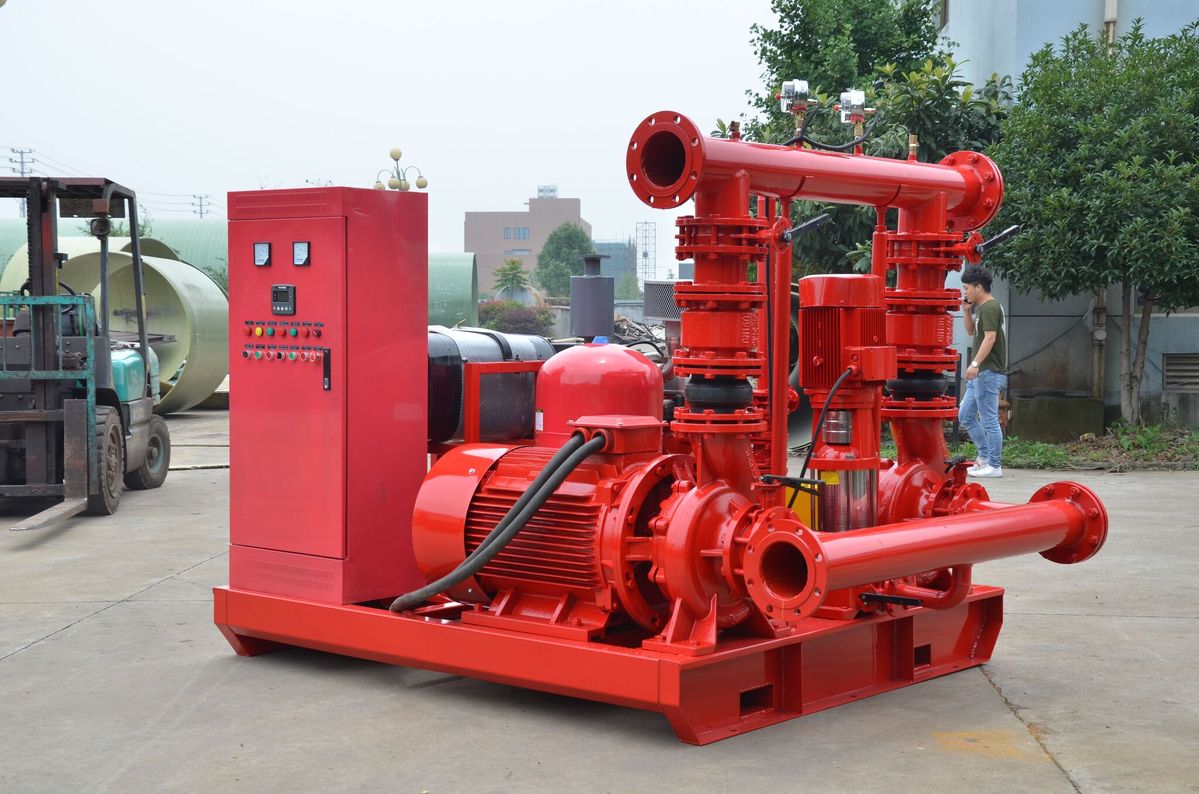
In the industrial sector, a fire protection system is a high-stakes engineering investment. However, the presence of hardware alone does not equate to operational safety. For high-hazard environments, efficiency is measured by the system’s ability to deliver rated flow and pressure the millisecond it is required.
Systematic inefficiencies often remain invisible until an emergency occurs. These flaws typically stem from a combination of mechanical neglect, hydraulic misunderstandings, and improper calibration of control systems. To ensure your facility remains compliant and meets international safety standards, it is essential to identify and rectify the following critical mistakes.
1. Critical Failures in Diesel Driver Readiness
Diesel-driven fire pumps are the backbone of fire protection when electrical grids fail. Yet, the most common reason for system failure is a diesel engine that simply will not crank during a crisis.
- Battery Sulfation Issues: Because fire pumps sit dormant, starting batteries often suffer from sulfation. Without a high-quality constant-float charger, the battery capacity drops below the threshold required to turn the starter motor, leading to a dead system.
- Fuel Quality Degradation: Industrial diesel has a specific shelf life. In high-humidity environments, condensation forms inside the fuel tank, leading to microbial growth or “fuel algae.” This sludge clogs filters and injectors, causing the engine to stall or fail to reach rated RPM.
- Cooling System Neglect: Many diesel fire pumps utilize a heat exchanger cooled by the pumped water. If raw water strainers are neglected and become clogged, the engine will overheat within minutes, leading to a thermal shutdown exactly when it is needed most.
2. Technical Misalignment of Jockey Pump Calibration
The jockey pump is a small pressure-maintenance pump designed to keep the system pressurized against minor leaks. If not calibrated with precision, it can cause catastrophic wear on the main fire pump.
- The Short-Cycling Trap: If the jockey pump’s cut-out pressure is set too low, or if the main pump’s cut-in pressure is set too high, the main fire pump may activate unnecessarily for minor pressure drops.
- Mechanical Stress and Damage: Main fire pumps are not designed for frequent starts. Short-cycling causes massive electrical surges in motors and mechanical shock in diesel drivers. This leads to premature wear on packing glands, coupling alignment issues, and potential failure of the main controller contactors.
- Pressure Setting Protocol: The industrial standard requires the main fire pump to start only when the jockey pump can no longer maintain pressure. There should be a distinct 10 to 15 PSI differential between the activation points of the two units to ensure stability.
3. Hydraulic Obstructions and Suction Line Integrity
A fire pump is only as efficient as its suction supply. Total Dynamic Head (TDH) and flow rates are strictly dependent on the friction loss and availability of water at the pump inlet.
- Cavitation Hazards: If the suction line is undersized or obstructed, the pump enters a state of cavitation. This creates vacuum bubbles that implode against the impeller, causing severe pitting. A cavitating pump will never reach its rated capacity, leaving sprinklers under-pressurized.
- Storage Tank Siltation: Over years of operation, water storage tanks accumulate silt and biological film. If the suction vortex plate is buried in silt, the pump will pull solids into the system, damaging internal seals and potentially clogging the small orifices in sprinkler heads.
- Valve Mismanagement: A partially closed suction valve is a silent efficiency killer. Even a valve that is only 10% closed creates enough turbulence to disrupt the laminar flow required for the pump to operate efficiently according to its performance curve.
4. Distribution Impediments: The Inventory Shielding Effect
While the pump room may be in perfect condition, the efficiency of the fire protection system is ultimately determined at the discharge point—the sprinkler heads.
- Violation of the 18-Inch Rule: In high-density warehousing, inventory is often stacked near the ceiling. If goods are stored within 18 inches (450mm) of a sprinkler deflector, the water cannot develop its intended spray pattern. This creates a shielding effect where the fire can grow laterally underneath the obstruction.
- Internal Pipe Corrosion: In facilities using dry-pipe systems, internal pipe scale can flake off and settle in the branch lines. During a discharge, this scale acts as a plug, rendering the fire protection system useless in specific zones of the building.
How to Prevent Future Failures
| Component | Technical Mistake | Impact on Efficiency | Corrective Action |
| Diesel Engine | Neglecting weekly test runs | Battery failure / Fuel gelling | Conduct 30-min weekly no-flow test |
| Jockey Pump | Improper pressure calibration | Main pump short-cycling | Calibrate with 10-15 PSI differential |
| Suction Piping | Debris or silt accumulation | Pump cavitation & impeller damage | Annual tank and strainer inspection |
| Piping Network | Closed or unmonitored valves | Total loss of water delivery | Install OS&Y tamper switches |
| Storage Area | Obstructed sprinkler heads | Broken spray pattern (shielding) | Maintain 18-inch (450mm) clearance |
Conclusion
Fire fighting pumps are essential for maintaining hydraulic pressure, system readiness, and life-safety reliability across industrial facilities. Understanding mechanical maintenance, precise pressure calibration, and suction integrity allows businesses to make informed operational decisions, minimize equipment failure, and ensure maximum protection efficiency.
For manufacturers in Malaysia seeking durable, high-performance fire fighting pumps, partnering with trusted suppliers like Thongfatt Jaya provides access to reliable equipment and expert technical guidance. Combining quality industrial fluid solutions with professional support helps industries optimize safety performance, extend component lifespan, and maintain robust, compliant fire protection operations.
Frequently Asked Questions
What are the main components of an industrial fire fighting pump system?
A standard industrial system typically includes a main fire pump (diesel or electric driven), a jockey pump for pressure maintenance, a controller panel, and associated suction/discharge valves. Together, these components ensure the system remains pressurized and ready for immediate deployment.
What is the difference between an electric and a diesel fire pump driver?
Electric drivers are generally easier to maintain but rely on a constant power supply or an emergency generator. Diesel drivers are independent of the electrical grid, making them the primary choice for high-reliability industrial sites where power failure is a risk during a fire.
How often should a fire pump undergo a full performance flow test?
While weekly no-flow tests are standard for readiness, a full performance flow test (Annual Flow Test) should be conducted once a year. This verifies the pump can still meet its original design specifications at 100% and 150% of its rated flow capacity.
What causes a fire pump to lose its prime?
Loss of prime is often caused by air leaks in the suction piping, a faulty foot valve, or a low water level in the storage tank. Without a proper prime, the pump will run dry, leading to rapid overheating and mechanical seal failure.
How does incorrect jockey pump calibration affect the main fire pump?
If the jockey pump is improperly calibrated, the main pump may “short-cycle,” turning on and off for minor pressure drops. This causes excessive mechanical wear on motors, controllers, and packing glands.